The antibiotic-free, Animal Welfare, and HACCP labels commonly found on pork packaging are not certifications granted under the same criteria. Antibiotic-free and Animal Welfare focus on how pigs are raised on the farm, while HACCP centers on hygiene management during production.
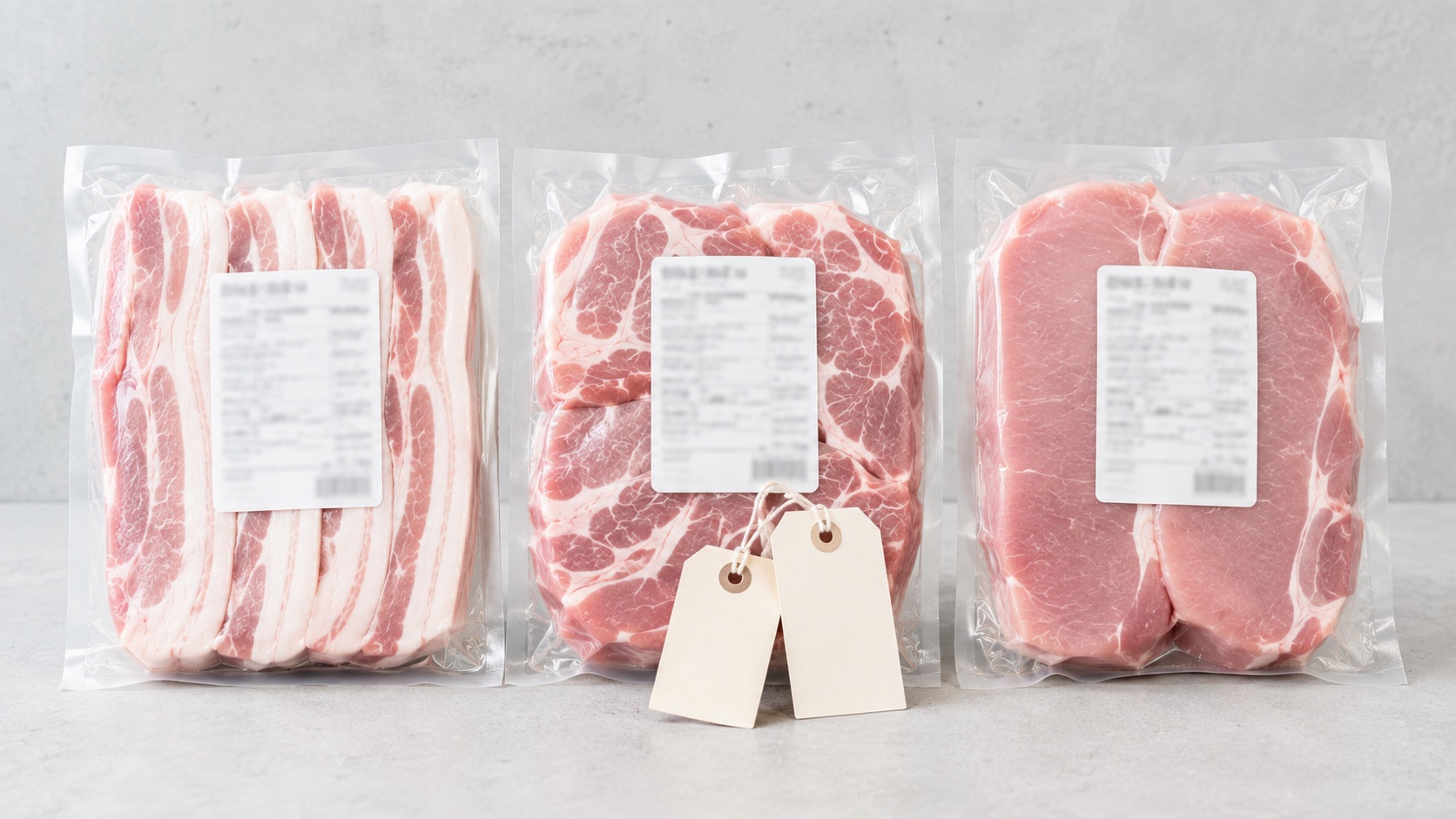
- Antibiotic-free
- Verifies antibiotic use standards during the raising process. Currently operates as a certification under the Livestock Industry Act.
- Animal Welfare
- Verifies housing facilities, stocking density, and management practices. Pigs have been eligible for certification since 2013.
- HACCP
- Verifies that a hazard management system is in place at farms, slaughterhouses, processing plants, and other facilities.
- In common
- None of the three certifications evaluate breed, taste, or meat quality.
Each certification looks at a different stage
Pork goes through raising on the farm, slaughter, processing, and packaging before reaching the retail shelf.
Antibiotic-free and Animal Welfare certifications primarily verify how the pigs were raised on the farm. However, their criteria differ. Antibiotic-free focuses on antibiotic use standards, while Animal Welfare centers on the raising environment and management practices.
HACCP is different in nature. It identifies potential hazards in the food production process and verifies that a system is in place to manage them. For livestock products, it applies not only to farms but also to slaughterhouses, processing plants, and meat packing facilities.
Even when multiple certification labels appear on a single package, they do not represent redundant certifications for the same thing.
Antibiotic-free livestock products
The antibiotic-free livestock product certification verifies whether prescribed antibiotic use standards were followed during the raising process.
The name "antibiotic-free" can easily be interpreted as meaning antibiotics were never used at all, but actual certification is determined according to the Livestock Industry Act and related certification standards.
Certification audits are conducted by certification bodies designated by the National Agricultural Products Quality Management Service (NAQS).
An important point about the antibiotic-free system is that it is distinct from eco-friendly certification. It was previously governed by the Eco-Friendly Agriculture and Fisheries Act, but after amendments to the Livestock Industry Act, the system was transferred. Since December 30, 2020, it has operated as a certification under the Livestock Industry Act.
Currently, antibiotic-free livestock products cannot display eco-friendly labeling. It is also a separate system from organic livestock certification.
Animal Welfare certified farms
The Animal Welfare farm certification verifies whether the facilities, environment, and management practices for raising livestock meet established standards.
The Animal and Plant Quarantine Agency (QIA) conducts document and on-site audits to grant certification. In Korea, the program began with laying hens in 2012 and has since expanded to other species. Pigs have been eligible for certification since 2013.
For pig farms, items related to animal welfare such as housing facilities, stocking density, and management practices are verified against the standards.
This is separate from antibiotic-free certification. A farm with Animal Welfare certification does not automatically qualify as antibiotic-free, and meeting both requirements means passing each certification's standards separately.
HACCP
HACCP is a system that identifies potential hazards in the food production process and establishes critical control points for ongoing management.
For pork, HACCP certification can be obtained at multiple stages from the farm through slaughter, processing, and packaging.
For example, at slaughterhouses and processing plants, the hazards requiring management during the work process are identified, and items such as temperature control, cleaning, and sanitation are managed and recorded according to standards.
If you see a HACCP label on packaging, it is worth checking which stage or facility received the certification. HACCP is not a label indicating antibiotic use or animal welfare status.
Comparing the three certifications
| Certification | Primary Stage | Core Criteria | Certifying Authority |
|---|---|---|---|
| Antibiotic-free | Raising | Antibiotic use standards | Bodies designated by NAQS |
| Animal Welfare | Raising | Raising environment & management | Animal and Plant Quarantine Agency (QIA) |
| HACCP | Production, slaughter, processing, etc. | Hazard & hygiene management | Korea Food Safety Management Certification Institute |
None of these certifications evaluate taste or meat quality, such as the fat ratio of pork belly or the tenderness of pork shoulder.
Antibiotic-free covers antibiotic use, Animal Welfare covers the raising environment, and HACCP covers hazard management. Keeping this distinction in mind makes it easier to read the labels on packaging.
Traceability numbers are not certifications
In addition to certification marks, pork packaging also displays a livestock traceability number.
A traceability number is not a certification indicating that certain standards were met. It is a number for tracking the history of that livestock product. Looking up the number through the Livestock Traceability System provides information related to the raising, slaughter, and distribution process.
Depending on the product, available information may include the raising farm, slaughterhouse, slaughter date, and grading results.
Pork without any certification labels may still have a traceability number.
When checking packaging, first confirm the origin, cut, weight, and traceability number. If certifications such as antibiotic-free or Animal Welfare or breed labels are present, treat them as additional information.
Frequently asked questions
It is not simply a label indicating zero antibiotic use history. The certification verifies whether the farm met the antibiotic-free livestock product standards established under the Livestock Industry Act.
They should be distinguished. The antibiotic-free livestock product certification operates under the Livestock Industry Act and cannot display eco-friendly labeling alongside it. It is also separate from organic livestock certification.
They are separate certifications. Animal Welfare verifies the raising environment and management practices, while antibiotic-free verifies standards related to antibiotic use.
It means the farm or facility operates a system that manages hazards according to HACCP standards. Depending on the product, you should also check which stage of production the certification covers.
The absence of a certification label alone does not indicate a problem with the product. Each certification is a separate designation awarded for meeting that certification's specific standards.
Certifications indicate whether the raising process and hygiene management passed specific standards. Taste and texture depend on breed, cut, fat distribution, post-slaughter handling, aging, and cooking method, so they are considered separate from certification.
Antibiotic-free livestock products can be verified through the National Agricultural Products Quality Management Service (NAQS), Animal Welfare farm certifications through the Animal and Plant Quarantine Agency (QIA), and HACCP through the Korea Food Safety Management Certification Institute. Livestock traceability numbers can be looked up through the Livestock Traceability System.
- Animal and Plant Quarantine Agency (QIA) Animal Welfare farm certification
- National Agricultural Products Quality Management Service (NAQS) Antibiotic-free livestock product certification
- Korea Food Safety Management Certification Institute Livestock HACCP
- Livestock Traceability System Traceability number lookup
- Korea Law Information Center Livestock Industry Act and related certification standards